The Fascinating World of Pandigital Multiples

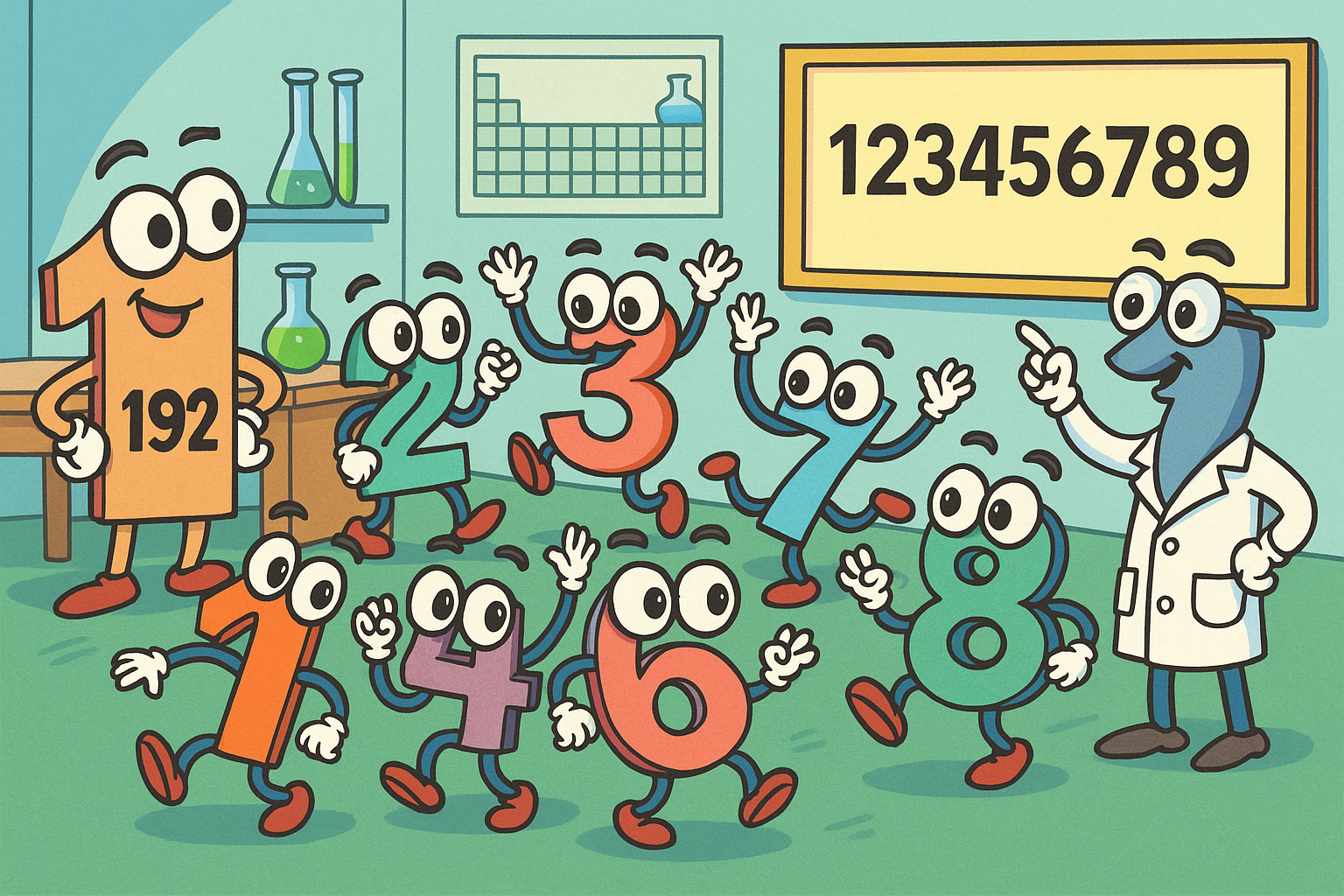
Ever wondered how numbers can combine in surprising ways to reveal hidden patterns? Welcome to the story of pandigital multiples—a playful intersection of arithmetic and puzzling beauty that anyone can appreciate.
What Are Pandigital Numbers?
- Pandigital simply means a number that uses each of the digits from 1 through 9 exactly once.
- For example, 123456789 and 918273645 are both 1–9 pandigital: they contain each digit without repeating or skipping.
Why does this matter? Pandigital numbers are like a perfect sudoku row: every piece in place, no duplication, a self-contained harmony of digits.
Enter the Concatenated Multiples Puzzle
Imagine you pick a small number, say 192, and then multiply it by 1, 2, 3, … collecting each result in a row:
192 × 1 = 192
192 × 2 = 384
192 × 3 = 576
Now, write those three products side by side as one long string: 192384576. Surprise—it’s a 1–9 pandigital number!
You’ve discovered a concatenated multiple of 192: the sequence of its first few multiples knit together into a perfect pandigital.
Hunting for the Largest Curious Case
That little example is fun, but it begs a bigger question:
Is there a number kk whose multiples, when concatenated, form the largest possible 1–9 pandigital?
It turns out the star performer is 9 multiplied by (1,2,…,5), giving 918273645. Even more amazingly, a four-digit base—9327—when multiplied by 1 and 2 in sequence produces 932718654, which is the largest 9-digit pandigital you can ever make this way.
Why It Captures Our Imagination
- Simplicity and Surprise
- The rule is easy: pick a number, list its multiples, glue them together, and check for a digit-perfect 1–9.
- Yet the outcome—the largest pandigital concatenated multiple—is delightfully unexpected.
- A Bridge Between Play and Pattern
- On the one hand, this is child’s-play arithmetic: multiplication tables and string construction.
- On the other, it reveals deep constraints: only certain bases and lengths can ever reach exactly nine digits without repetition.
- A Mini-World of Search
- Finding the answer by hand is tedious; you must systematically try many candidates.
- Modern computers can exhaust the possibilities in milliseconds, yet the underlying logic remains fully transparent.
Beyond the Numbers
This puzzle sits at the crossroads of recreational mathematics and algorithmic exploration. It reminds us that even simple operations—multiply, write, check—can weave into patterns that delight, surprise, and challenge.
In upcoming posts, we’ll dive into different ways to teach a computer to hunt for these pandigital multiples—first in straightforward code, then in super‑optimized versions that leverage modern hardware. But here, you’ve seen the stage: a world where the digits 1 through 9 dance in perfect order, waiting to be discovered.
Stay tuned for the next chapter: How to programmatically find pandigital multiples, step by step!
 Shai Asher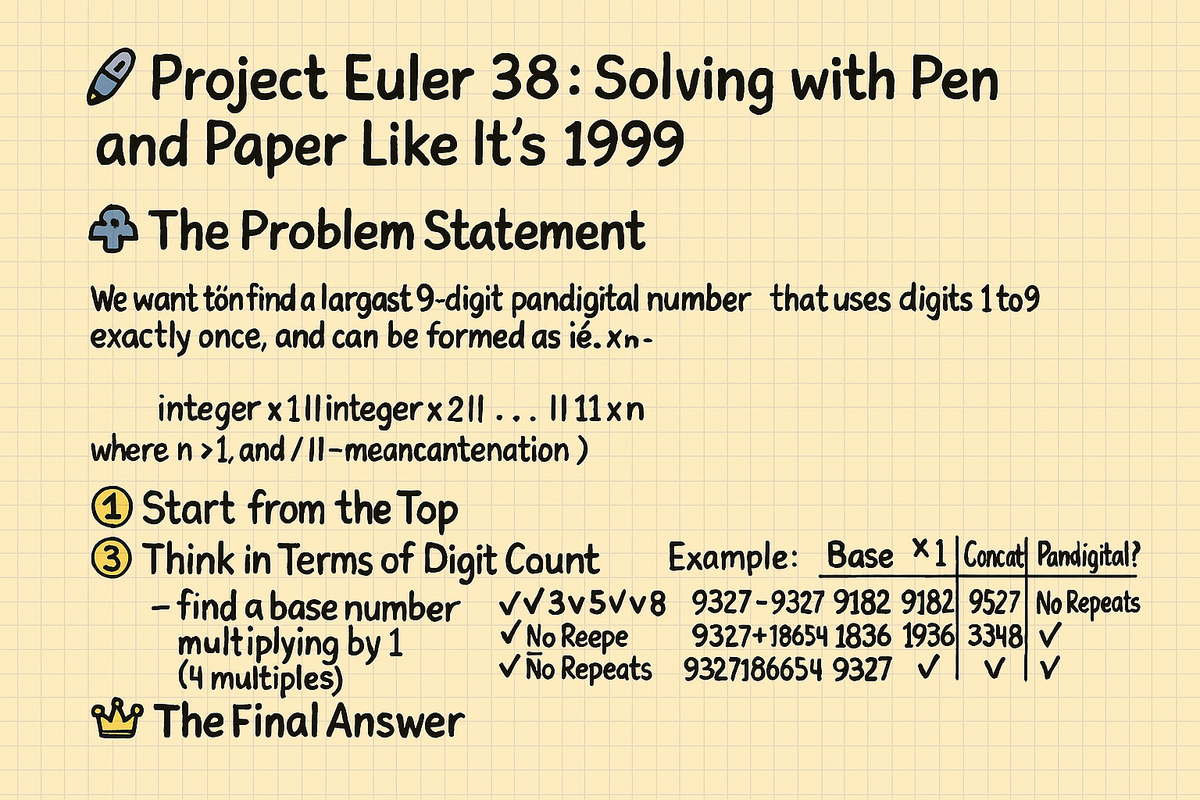
Next